Braving the threat of Human Replacement

If people are so concerned about their jobs that they would vote for Trump, they will definitely short their fuses when they see what his administration has coming for them.

According to an article published in early April 2019 by the Boston Globe, that the congressional districts with the highest threat of automation affecting employment are linked with high concentrations of Trump voters. These people may not have won the popular vote, but have definitely been a vocal faction in the US. Sadly, the Trump administration does not even have Automation “on their radar”, according to Treasury Secretary Steve Mnuchin. The man they voted for isn’t concerned by the very thing that pushed them to do it in the first place. The best that can be done for them is to inform of what is really to come.

I have studied Computer Science for four years, five if high school counts. I have conducted research in the fields of AI & Machine Learning. When I say that people need to really understand the phenomenon of automation, there is definite credibility to that statement.

The human race has seen industrial revolutions on three separate occasions. These times were similar to today where the advent of technology replaced people’s jobs and revolutionized the way many live their lives. Fortunately, we have history of all of these times to look back on in preparation of Automation, the “Fourth Industrial Revolution”.

What makes Automation the next Industrial Revolution? From every way it has been described, even including how much people fear it will change the face of the earth, there is no better way to put it.  And if we were to draw anything from the three previous industrial revolutions, there are two ideas that would be the most important.

The first is that human civilizations not only survived and thrived each time. The second is that the world was radically changed after the fact. Factories & machinery had never existed prior to the first Industrial Revolution, but now, modern manufacturing would not be recognizable without them. Who is to say that we are not on the forefront of another radical change? In the same vein, even modern experts might be barely able to fathom what civilization will look like after this revolution. In the face of this, I believe the public must be aware of several realities that we will have be facing.

According to a John Hopkins professor  Tinglong Dai the promise of robotics/automation is, “to liberate human beings from the ‘3Ds’—dirty, difficult, and dangerous jobs…[to] focus on creative, personal, and original activities.” This first reality means people will no longer have to risk their lives, slaving away in dangerous jobs. Now that they will not have to continue such jobs, their jobs will have to shift to somewhere else.

The second is much more positive. Following this shift, there is a treasure trove of job opportunities. It has been documented in every media source that is even remotely related to the technology industry, from Forbes Magazine to CNN, that there are “more tech jobs than there are people to apply for them.”

For those whose employment will be affected by the rise of automation, my recommendation is to pick up new technical skills. The market not following the Trump Administration’s demands for lower-skill labor jobs. These jobs are most at risk of being automated. One can see how every task from ordering your food at a restaurant to screening people through US airport immigration can be performed by an automated system.

Third, the operative word in the previous statement is ‘task’. With the number of tasks one has to do for their job, a single machine cannot be designed to perform all of those. Instead, machines are designed to perform a single task. Take the ordering kiosks at Mcdonalds for example. For a worker who used to work the cash register as one of their job tasks, they would now have more time to prepare your meal, operate the drive-thru, and maintain the restaurant. With how many tasks are part of a job, it will be difficult to entirely replace a person with a machine.

But this, doesn’t discredit the previous 2 realities. These come together to show that the market will be slowly phasing out people from their jobs, but it will be happening nonetheless. Less people will be performing “3D’s” jobs, and more opportunities will open for them in the tech sector.

New Developments in the Anti-Vaccine Movement

Earlier this month, Medical Xpress published an article detailing the current craze of Genomic Medicine among the “Anti-Vaxxer” community. Genomic Medicine is the use of our current understanding of the human genome to deal with diseases. Since this field doesn’t necessarily call for the use of vaccines to treat or cure infections, those in that community feel the mere existence of this field attests to the needlessness of vaccines. They believe that it can show how microbes are good for and are integral to the human body. Specifically, that the human body benefits from being infected by a microbe.

Let’s just take a moment to understand what a vaccine is. It is a dose of a heavily weakened or dead material from a microbe that is injected into the body. Why is it done in the first place? That is because the human body has the remarkable ability of  internally identifying entities according to their genetic material, and it does a much better job of this while not having to concentrate on fighting a disease. This is how you can be infected by a new strain of a virus or disease, and, with enough time, fight it. So, vaccines insert weak or dead material so that the body doesn’t have to deal with a major infection. Instead, it can focus on learning the genetic markers of the microbe and how to deal with it.

Now that is done, it is important to point out that their belief in Genomic Medicine only supports the use of vaccines. A vaccine is just a less harmful way of letting the body learn how to spot the infection and how to fight it. This is exactly what would be done when the body is naturally infected by a disease, just with a similar result with a lot less risk. The referenced “Anti-Vaxers” say that the body should be left to be infected & will benefit from that. Well, the way the body benefits is by learning how to fight the disease later on, which is what a vaccine is doing with a much less severe infection. A vaccine with infect the body too, just as the “Anti-Vaxers” want, but with lower consequences. This seems like another proponent for the use of vaccines to me.

Sources:


Just Hear Me Out. Insect Farming

This may a little gross, but hear me out. Insect Farming. I know the topic alone makes many uncomfortable, so I’ll refrain from including any pictures. There are a lot of benefits to this & is way more efficient than the ways we are doing this right now. Entomophagy, the eating of insects, is something the rest of the world has been doing for centuries. This is just another way the Western world is falling behind. And this is from bugs even.

From a health viewpoint, “Although bugs are higher in sodium, studies have shown that, gram for gram, they are healthier than meat, lower in saturated fat, and high in nutrients,” said Amy Shapiro , M.S., R.D., C.D.N., founder of Real Nutrition in New York City. It was also found that cricks have higher levels of iron, calcium, and magnesium than beef. Additionally, the it was found that the copper, zinc, manganese, magnesium, and calcium in crickets, grasshoppers, and mealworms were more readily available for absorption than the same nutrients in beef. And since insects contain way more protein for kilogram than beef, for a much lower cost to everyone, why not give it a try?

According to the paper, titled “Bioconversion of organic wastes into biodiesel and animal feed via insect farming” from the University of Hawaii, about ⅓ of all food produced for human consumption is wasted worldwide. Traditional means of food production, meat or vegetable, are costly, especially land and energy wise. Insect farms have been shown to just simply take all of the food waste lying around, feed them to bugs, and produce nutritious biomaterial for us to use. They don’t need wide swaths of land to grow & we all know how quickly they reproduce. It is only the “gross” factor that is stopping us.

The Insect Craze taking the US since 2017

From a cultural perspective, it is only Western cultures that consider insects as gross and soles as pests. And even then, there are pockets of the US where that is changing. For example, the Seattle Mariners, a professional baseball team in Seattle, Washington, have been serving toasted grasshoppers with chili, lime, & salt since early 2017 with extreme levels of success. The concession stands have actually been known to run out of the thousands of critters they stockpile for each game by the 2nd inning. All the research points to insects being a much better source of protein. We just have to join the rest of the world and acknowledge that. It wouldn’t hurt to give it a try. It doesn’t have to be a cockroach or spider. It can just be some grasshoppers or crickets that people across the coasts have been embracing.

Source:

The Wave of Automation. How bad is it?

It is a commonly held fear that robots and artificial intelligence will one day end the world. Or that, one day, these technologies will become so capable that we, their creators, will lose all control over them. With a strong level of confidence, it is concluded that a robot apocalypse is far off in the future, assuming it is even possible.

To set the stage, what is automation? What is this all-powerful force that seemingly threatens the jobs & livelihoods the world over? To be honest, it is less threatening once one understands the topic a bit better. Automation is the use of machinery to help with manufacturing and processing tasks. The word “help” is the operative word here. In the projected future, most of the integration of machines into the workplace is to help with tasks that humans are performing already. The future of automation looks more like cooperation between humans and machines, instead of a widespread machine uprising over the human populous.

People have feared the rise of automation since it was first popularized. There are roots in this fear that go back to the the 1920s with Karel Čapek’s play R.U.R. ‘Rossum’s Universal Robots’ (1920)[1], which coined the term “robot”. It comes from the Czech word “robota” which means “forced worker”. This highlights the ingrained fear of the rise of technology and the potential to replace humans in the labor force, since its beginnings in cultures the world over. More recent hallmarks in pop culture have only exacerbated this. In Terminator (1984), an artificial intelligence called Skynet literally plays the main antagonist for the entire franchise, using its robot forces to threaten the end of humanity. The story of 1987’s Robocop revolves around a police officer, who is cybernetically enhanced himself, fighting a robot meant to replace police forces in Detroit, Michigan. The droids in the original Star Wars Franchise come to literally take over the military and labor for the galaxy. These are known as some of the most famous films of the past century and all of them perpetuate the same fear of technology and the usurpation of roles in human society as we know them.

However prevalent in modern culture the idea of robots taking over may be, one must remember that everything from Capek’s R.U.R. ‘Rossum’s Universal Robots’ to any sci-fi show that has maintained the fear or automation has been fiction. As for the news reports and articles one can find online which exist in real life, it is found that they should not be taken seriously at face value. This fear will probably remain with many & will not go away easily. Going forward, it will be important to remember that machinery will be coming into workplace slowly. We are far from the reality of people walking into work one day to find machines in their places & they have no job left to perform.

When most new reports have gone on about how many jobs would be taken up by machines, these claims have been debunked, unfortunately after they had already been released. These claims were actually representing the that machines would perform some of the number of tasks one has as part of their job. Just like how a teacher has other tasks to their job besides teaching students, such as grading papers and attending meetings, so do many people who work in the industries that face the integration of machinery. For example, one on the assembly line may have a task of inserting screws into a car, on top of the rest of the tasks to assemble the car itself. Instead a machine would handle the insertion of screws, leaving the person to be able to dedicate more time and effort into their other tasks. So machines may be added to manufacturing processes and the like, but this does not necessarily mean that entire jobs will be replaced. This miscommunication has been cited and attemptedly clarified by many institutions. Boston University published a paper titled “Automation and Jobs: When Technology Boosts Employment[7] which stipulates this clearly. It adds that 36% of tasks in the occupations they studied are “potentially automatable”. There is a potential for these tasks to be supplemented by a machine. The paper also shows that people’s tasks would then shift to handling more quality control and other segments that ensure better performance from the assembly line instead of faster output. So instead of automation causing mass unemployment, it is much more likely that we would see people focusing more time on a smaller pool of tasks.

On top of this, there are machines that will actually enable more jobs for people. With the argument that humans will be replaced by machines in the workplace to do their jobs, one should also think about the jobs to create & maintain those machines. The Mckinsey Institute[8] published an article stating that because of technological advancement, we can expect 8-9% job growth worldwide by 2030. For example, in this day and age, we are not sophisticated enough to have machines that can efficiently reproduce other machines. This means there will be people needed to design and produce them. In addition, automation may make tasks easier to perform and with greater precision, they still require humans to operate these machines. This means that even with the jobs that do get lost from the integration of automation, there will more jobs produced to mitigate that loss.

One of the major advents thrown around, when the topic of automation is discussed, is that artificial intelligence will be the “be all, end all” of humans working as we know it. But what isn’t usually brought up is that humans will be still be needed to produce something like an artificial intelligence. Ben Medlock PhD, and founder of multiple successful tech startups, states that artificial general intelligence (AGI), the level of AI (artificial intelligence) & machinery that the human population is worried about, is “decades behind, and therefore decades away”, according to a Forbes Article[9] on the possibility of AGI in the future from August 2018. The progress made into AI that we have heard of so far has been on machines made to serve 1 purpose. Google’s AlphaGo was designed to only play the game Go. IBM’s Deep Mind was made to only play Chess. Elon Musk’s OpenAI project only plays DOTA 2, a massively popular online video game. These projects are only the most famous of the AI projects that have been undertaken in the world. All of them, have been painstakingly developed for 1 specific purpose. We are far from a AGI, that can do more than just play 1 game or serve a single task. The general population has little for worry about for the near future.

Moving from technology that has or will be integrated into the workplace, a business has to choose to employ automated machinery in the first place. First, there is an enormous upfront capital cost to automated machinery. One has to pay to develop one that can perform a desired task, including the material, production, and training costs to get the machine up and running. According to the Encyclopedia Britannica[10], such costs for an automated machine are immediately measured in the millions of dollars already. Not to mention that if something were to go wrong in the work environment, like a mishap on the assembly line, a machine is cannot be trained to handle any such eventuality. According to a paper titled the Ironies of Automation[2] from the University College of London, “[the] automation of industrial processes may expand… problems with the human operator… and on the potential for continued use of the human operator for on-line decision-making within human-computer collaboration.” Since these machines are trained to do one or even a few tasks at most, they cannot be taught how to react to changing factors in their work environments like humans can. Take the case of self-driving cars for example. They can only drive cars in the conditions used to train the machines. This is why we have seen a number of reports about such cars being destroyed by threats they cannot be normally trained for. For instance, a TESLA self-driving car collided with a commercial shipping truck at an intersection[12] despite even common sense stating that one should not drive through an intersection while a truck is moving through. Every human knows that the world is random & is full of unexpected happenings. A machine is very unsuited for many situations outside of a clean laboratory. And since mankind if decades away, at least, from producing a truly capable AGI, we are stuck with having to train machines for conditions that the humans that make them can predict.

There is something to be said about the long-term benefits of automation. A machine may be able to work 24 hrs a day, 7 days a week, & 365 day a year, without any need for sleep or pay. But to take full advantage of these benefits, a company would have to pay for their entire assembly line or work force to be automated. This is an enormous cost, both money and time wise. And if they were to automate to any extent, it takes years for the projected benefit to the implementation of automation to outweigh the cost. And like humans, machines have a maintenance cost. They have parts that need to be replaced & occasionally need repairs, just like how humans need to eat, and go to the doctor when they are not well.

With costs coming into the discussion, the economic component of automation comes more into focus. Take the fearful idea of the a future where machines have taken over the supply chains and manufacturing jobs. In this future, people still have to receive a wage to afford these now machine-made products. Given the mostly capitalist markets employed by much of the world, people will need to earn a wage by working jobs that contribute to their respective economies. Goldman Sachs, one of the most influential investment banks in the world, still holds consumer spending[11] to be the backbone of global markets. And people need wages & salaries to spend on the products & services companies release. Regardless of how aggressive the push for automation will get, we can rest assured that people will have to stay employed to continue to consume & keep their economies going.

The wave of automation is not as much of a fearful force as many believe it to be. The prospects for machinery and artificial intelligence replacing humans are low and much farther ahead of us. It is concluded that even with the integration of automation in the workplace, people will most likely see a shift in the tasks they focus on through the day, instead of their jobs being replaced. And in the instances they are replaced, their companies would incur a massive cost to do so & there are jobs that will come out of the rise of machinery that are open to the public. People have to stay employed to remain consumers of the products companies want to sell. Otherwise, they would have no customers to satisfy or keep up with.   

Sources:

  1. Čapek Karel. R.U.R. Rossum s Universal Robots: Kolektivní Drama o Vstupni Komedii a 3 dějstvích: 2. Vydani. Penguin Random House, 1921.
  2. Ironies of Automation, a paper published by the University College of London https://www.sciencedirect.com/science/article/pii/B9780080293486500269
  3. https://journals.sagepub.com/doi/abs/10.1518/001872097778543886?casa_token=0I8U0kKi8ygAAAAA%3A5-J7RRgrdMJHcohl3DM5EqLKSi2Kb_6e6eYB9T6trF3N0xSdX8kz7BJsVGoGWEG0n-2-GIvhWl_oCw&
  4. https://medium.com/@autodesk/the-paradox-of-worker-shortages-and-automation-fears-5951b82fe100
  5. https://www.law.upenn.edu/live/files/3397-di-nucci-e-santoni-de-sio-f-whos-afraid-of-robots
  6. https://www.ft.com/content/a9ec6360-cf80-11e5-92a1-c5e23ef99c77
  7. https://papers.ssrn.com/sol3/papers.cfm?abstract_id=2690435
  8. https://www.mckinsey.com/featured-insights/future-of-work/jobs-lost-jobs-gained-what-the-future-of-work-will-mean-for-jobs-skills-and-wages
  9. https://www.forbes.com/sites/forbestechcouncil/2018/08/28/how-far-are-we-from-truly-human-like-ai/#6cda424231ac
  10. Encyclopedia Article on Automation https://www.britannica.com/technology/automation/Advantages-and-disadvantages-of-automation
  11. https://www.cnbc.com/2018/12/09/goldman-sachs-consumer-spending-to-keep-hopes-on-economy-alive.html

https://arstechnica.com/cars/2019/03/feds-investigating-deadly-friday-tesla-crash-in-florida/
Helping You Read Science

This site was set up to help people become more scientifically literate and less scared of science publications. It would only be right that this site at least help my readers read through scientific journals and research papers. I know it can be scary, so I want to do my best to help you through it.

First of, one would need to know where to find scientific papers. Traditionally, people looked to magazines like Scientific American for popular or newsworthy research. And by newsworthy, this doesn’t include the use of clickbait or trickery. These articles are actually substantial in their own ways & their researchers deserve recognition. Nowadays, I would recommend using Google Scholar & just simply search on a topic you are interested in. I was even able to find papers on learning to read scientific papers. These include Exploring Nutraceuticals to Enhance Scientific Literacy: Aligning with Vision and Change by the National Association of Biology Teachers & A Student’s Scientific Mind: A Confirmatory Factor Analysis from the University of Malaysia. If you aren’t up for looking up papers yourself, YouTube channels like “Last Week Tonight with John Oliver”, “Adam Ruins Everything”, and “SciShow” just to name a few list all of the interesting papers they pulled from. I would really recommend shows like this that are focused on clearing up misconceptions and informing the general population, in a format they can digest.

Second, one should read the “abstract” section of the paper. This is the general summary of the paper & its results. If you don’t want to read through all of the scientific jargon but still get a taste, start with the abstract. After this, if you want to look further, go right ahead. Research isn’t free. This means that sometimes a paper won’t be easily accessible right off the bat. However, many schools, universities, and libraries are more than willing to give you access. All you have to do is ask, unless you already attend one, then you don’t even need to do that.

Third, if you get your hands on paper, you’ll see it is split into sections: the Abstract, the Introduction, the Methods, and the Results. The Abstract was already discussed above. The introduction lays the foundation for the study. This gives background info needed and specifies the environment that the study was run under. It contains what kinds of people or thing that the paper applies to. The Methods are how the data was gathered and studied. The Results are the actual results of the studies. Here is where the researchers would analyze the results and tell you what they mean. This also usually contains a disclaimer about their results and limitations of the study. This entire process should tell you that science isn’t perfect, so it’s really important you learn how to navigate and do not get swept up.

Why am I so focused on improving scientific literacy? In this world of subjective interpretation, alternative news, and fake research studies, I feel the best thing I can do is give people the ability to see the research results themselves and see it for what it is. We need to be better. On a social scale the world over, I want even people without anything more than a high school diploma or a GED to be able to understand the information that is at their fingertips. This way, people will be less gullible to what they hear on the news & will foster more discussion of ideas. These will clearly lead to a world better than what we have now.

Sources:

Is school unnecessarily hard? Is it necessary?

In school, we have all heard it before, “it’s hard because the world is hard” or “we are just preparing you for the future”. My math classes in high school especially made sure I believed I would need it in college. But the fact that they had to reassure me that what I was being taught was going to be useful has been scaring me. Especially as someone who has suffered from not being able immediately apply the information I pick up, I found, and still find, this very troubling. This begs the question in everyone’s mind at this moment, “is school worth it? Is is necessary?”

According to the National Sleep foundation, ⅔ of high school students in the US are sleep deprived, getting less than the recommended minimum amount of sleep for humans their age. And it’s not like the problem stops there. A research study titled, “Work organization and mental health problems in PhD students” from Belgium’s Ghent University, shows that 50% of students who continue higher education up to the postdoctoral level are projected to have or develop mental disorders from their prolonged distress. These statements attest to a larger trend that has persisted since the 1960s. Students starting from the high school level have been drained and overworked, continuing to be as they move on in their education. In its current state of being focused on meeting national testing standards, the organized education system in the US has been found to be more difficult than it should be. And it has less than positive results. Pew Research Institute results, from 2018, place the US at 37th out of 71 countries in math and 19th in science. It is statistics like this that the US was trying to beat with the current Common Core system, without a really clear improvement from the past.

To take this trend of difficulty even further, many have begun to believe that education, at least in the formalized setting that has perpetuated this trend, is unnecessary. Drawing from my first paragraph, all students share moments when they legitimately question if what they are learning on a given day in school is worth anything. They ask if it will serve any purpose in their lives. In response, people have begun to home-school their children since the 1980s. According to the Gale Research Database, 2.3 million students have been removed from the education system and are being home-schooled instead. And interestingly, home-schooling have not been definitively shown to be performing less than their public or private school counterparts. The US Department of Education found home schooled high school students were actually being accepted into college at similar rates. The data shows that organized education is not the only way to progress in this economy. And if we take the argument back to the college & university level, hiring websites such as Monster or LinkedIn have shown a trend of businesses not requiring a degree or formal education to be employed. To be fair, there is a remaining advantage to having a degree in the current market, but the data shows we are moving away from that.

In conclusion, the answer to if school in the US is unnecessarily hard is a definite yes. It may be wise to see some longer lasting results, but it would be a good idea to continue to re-evaluate how we can educate our nation. If it is necessary is a bit harder to answer, but the data leans towards a yes as well. We will see how the US changes in the future, but as for the state of things in 2019, this is how they are.

Source:

Does reducing your calories do anything? Is this, and any scientific paper, trustworthy?

You will be glad to hear that reducing the number of calories consumed really does improve one’s health. According to the study, “Fasting-mimicking diet and markers/risk factors for aging, diabetes, cancer, and cardiovascular disease” by USC Professor Valter Longo, long-term calorie restriction, “showed that body mass index, blood pressure, fasting glucose, IGF-1, triglycerides, total and low-density lipoprotein cholesterol, and C-reactive protein were more beneficially affected in participants at risk for disease than in subjects who were not at risk”. In short, the study concluded that calorie restriction really helps. But, the intake restriction is much higher than one would expect. It included the participants do a 5 day fast for 3 consecutive months. That means for 5 days one month, 5 days the next month, and so on, they had to eat according to a special diet called an FMD (Fast-Mimicking Diet). This diet had them eat only 1,100 calories the first day, and then 700 for each of the next 4 days. This may be crazy for these 5 days, but each of the participants lost at least 2.6 kg (5.7 lbs) of total body fat. And, in retrospect, having a difficult 5 days doesn’t seem so terrible. Although, the researchers stipulated that you couldn’t do a “recovery binge” following the 5 days, as in pigging out after the diet is done. They had to go back to a normal existence after.

You have all heard it before. “Studies show…”, “scientists say”, and “this report says…” before in the daily news or whatever parts of the internet you dwell in. It has given us hilarious headlines like, “Studies show WINE is the key to long life!” and, according to the Washington Post “Good news for chocolate lovers: The more you eat, the lower your risk of heart disease, study suggests”. So you will probably ask why should you trust the results stated above. First of all, this article has been cited and reviewed by 85 other institutions through Google Scholar alone. This matters because published scientific journals are not just taken as fact in academia. They go through a rigorous process of reviewing & critiquing. This also means that the studies that survive this ordeal & become as popular as this one are pretty up to snuff. The same cannot be said for many other studies out there. University of Colorado, Denver professor Jeffrey Beall has compiled a list of 1231 publishers, each with their own compendiums of journals, that are willing to release articles without anything close to a decent vetting process. Ironically titled “Jeffrey’s List”, it documents this phenomenon, titling it “predatory publishing”. As long as the authors can pay the publisher’s fee, they can get their article published.

In the piles of information available on the internet, many of those articles go unnoticed. But, when news channels and clickbait articles want to release headlines that even remotely match what their audience wants to hear, these articles go beyond just being potentially harmful. And this has been known. Institutions like Forbes, Vox, BBC, and the Guardian have documented multiple lists of studies with results  that have not been able to be replicated by other academic institutions, even while following the exact same protocols & processes. This is a huge red flag. Such articles are not to be trusted. The scientific community has been troubled by this as well. The publishers have been be vetted & approved have been adding further requirements to ensure higher quality standards. Authors now have to add a concrete listing of their processes, the data used, and the environment that the studies were run under, so that others can make sure the results are credible.

What does this mean for the rest of society? Those of us who aren’t paid or able to perform those kinds of reviews. First of all, we have to make sure we take the headlines and articles we are exposed to with a grain of salt. We no longer live in a world where a scientific study can be taken as fact. Second, we cannot make major life decisions for ourselves, and especially not others. We have heard this story before. Apparently, the entire anti-vaccine movement is based on 1 article published by the now discredited Andrew Wakefield about the supposed link between the MMR vaccine and autism. And we all know how much commotion has been caused by that article and the following movement. Unfortunately, many of the overall very negative criticisms of the article did not make as much of a splash in American society as the original article. Hopefully, more people can be informed that you cannot trust articles like this one. If you are going to listen to one, I at least ask you to consult a credentialed expert in the field and also take a look at the published critiques of the same article. Overall, people need to be more literate and aware of the information that they can be exposed to. Hopefully, this is only the first in many articles that can give people at warning.  

Sources:

Why does the post office still exist? What would society look like without it? What does it mean for us?

This post explores why we still have post offices, at least in the United States, and what would happen if we were to simply get rid of them. The United States Post Office (USPS) was revolutionary when it was established in 1775 and did well to survive the ages of horses, trains, and planes, but the internet has made their services unnecessary. People don’t send mail to each other with physical letters anywhere close to how much they used to. It has been entirely replaced by text messaging, email, & social media.

Today, when most people don’t expect traditional mail and letters. Instead, they expect Amazon packages and parcels that they have ordered from all over. Not to mention the many coupons that usually get thrown away. Mail is no longer the communications medium it used be. Instead, it is currently more of a broadcast one at best. What about all of the packages that the USPS delivers? FedEx & UPS already cover that. If you are singularly worried about Amazon deliveries? They are already trying to set up their very own delivery segment of their business. Plus, when you want to get/send something fast, you never think about going  to the post office. These 3 are much better at that anyways. We must face it. The USPS is nowhere near to as relevant as it used to be.

How about the environment? How is the Earth impacted by the Post Office? Well, looking at coupons alone, over 3.2 billion were distributed in the US in 2017. But who still uses coupons? Of those, 0.4% were actually used in their stores. The rest either went into the recycling bin, or, in most cases, the trash. But, coupon distribution is just a percentage of the post office’s operations. We have yet to consider the rest of the waste that comes from the boxes, paper, natural gas, and work hours involved in what they do. According to University of Southern California Professor Greg Autry, “the post office is a government subsidized organization made to put trash on your doorstep, just to get picked up by another government subsidized organization”, in his SFGate article Do not call, do not spam, do not mail. Unfortunately for us, Professor Autry is correct, in more ways than one.

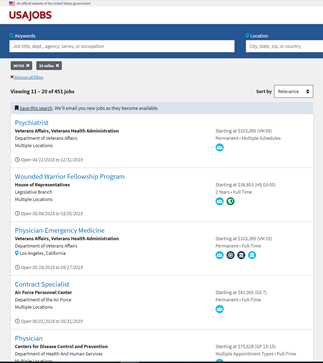
In 2018, the post office’s operations cost the United States $2.7 billion. There is so much that such funds could be used to improve. Others have stated that the USPS needs to remain as it employs so many. They are technically correct. In the study, titled Studies of Social and Commercial Benefits of Postal Services: Economic Effects of Post Offices, it is stated that there is , “small, negative impact on employment in the ZIP codes with post office closures.” The closing of post offices in such areas has had a negative effect, but its small. The government has USAJOBS, their own employment website, and many of those positions are still left empty. My zip code had 451 open, well-paying positions itself, so clearly we could benefit from knowing about those openings instead of so many across the country feeling that there aren’t any opportunities out there. I don’t know, maybe something like a blast notification to all eligible unemployed people in a given area, using the information that the government already knows about.

Aside from the prevention of the aforementioned environmental and economic damage, here is how a future without the post office would look like. Advertisements and coupons would go to your email box, and then probably further into your spam folder as such things already do. The lack of such spam mail showing up on your doorstep or in your physical mailbox will mean an easier trip of carrying delivered post into your home, and less paper thrown away, so less trees wasted. According to the USPS’s own website, “our vehicles used more than 171 million [gallons]“ in 2015, so we can expect millions of gallons of gas becoming available for everyone else. As stated earlier, there other major companies that would be more than willing to have the extra business, all without costing the government the billions of dollars that could get elsewhere. Luckily for us, bills and taxes could then be handled online. No need to worry about sending it ahead of the due date to make sure they are submitted on time, when you can just input your card information a few times and get that all handled. We can already join the push to have increasingly paperless government filings that has swept the globe from Mexico to Estonia.

There is something to be learned from this for us as a nation. The USPS is outdated & is beat out by businesses that have risen in the age of the internet. And that applies to other governmental processes that are kept around for illogical reasons like, “this is how things have always been done.” The advent of technology is great and can make people’s lives so much better. Smaller parts of the country have recently begun embracing this concept. San Francisco now sends out texts to people on food stamp programs to remind them to sign up again after their registration with the program expires. Like many others in the nation, the Boston legal system is understaffed, so they implemented an online service like LinkedIn to introduce teens and young adults to the open positions they offer. This has reduced unemployment and has put these people on better paths in life, as crime & poverty in their demographic have declined. These are just some examples of how technology is used to improve what our government does, with so much potential still out there. We, as a society, just have to go and do it.

Sources:


I need to write this down!… In the shower….

Have you ever been in the shower when you immediately get that “Aha!” moment? Or, do you ever feel like the only place where you can come up with good ideas is in the shower? Fortunately, you are not alone. Back in 2015, a scientific study was published about this very phenomena. Across the experiment’s 1,114 sampled participants, one’s age didn’t have so much to do with it. The changing factor was one’s level of education, with an increasing frequency of those moments of otherworldly insight for each additional level. Overall, it happened to 80% of the participants, from all different ages and backgrounds. In real life, this doesn’t mean that 80% of the whole population experiences it, but it does mean that it is a genuine experience and is a significant part of people’s lives.

For those of you who wonder why this phenomenon even occurs, it’s due to the brain relaxing the prefrontal cortex—the brain’s command center for decisions, goals, and behavior. This latter part is accomplished by increased dopamine flow from one being in the shower, exercising, driving home, etc. It also switches on the rest of your brain’s “default mode network” (DMN) clearing the pathways that connect different regions of your noggin. In short, the dopamine helps your subconscious process your thoughts, while you are doing something else.

Unfortunately, it isn’t some superpower where one can summon godly levels of clarity and intelligence just by being in the shower. It actually doesn’t even have to be in the shower. It is confirmed by the study, Do People Really Have Insights in the Shower? The When, Where and Who of the Aha! Moment, that it just takes some form of menial task or action that you don’t really have to think about. In fact, you will be glad to know that the likes of Einstein have greatly benefited from this. Einstein cited his time in the patent office in Bern, Switzerland as “that worldly cloister where I hatched my most beautiful ideas”. Einstein’s years in the patent office were arguably the most successful ones of his career. In 1905, he published three papers that are utterly groundbreaking in his field: Brownian motion, quantum theory, and special relativity.

Today, the phenomenon has gone on to describe an entire community where people share thoughts that are surprisingly relatable, but are entirely out of the box at first glance. Even though these may be utterly random, and a bit silly, these just exemplify the mental connections that people have made. Some examples for the Reddit community dedicated to this are below:

  • “Cheese is just a loaf of milk”- RezzexOfficial
  • “School is basically a recap of human history because we missed it and need to be caught up before we can function in society.”- Dredgeon
  • “We take it for granted that the text messages we send aren’t showing up as something completely different on the other person’s screen.” – Ramses the Pigeon
  • “In forty years, some of the recipes that we stole from food blogs will be known as “old family recipes” by our grandchildren.” – Cajun_Hobo

This “shower effect” has interesting implications as many have been able to make logical and rational connections because of this process. Individually, it means that any one of us is capable of more than even we are consciously aware, as all of that thought is done subconsciously. And as a whole, this creates a lot more potential for those who do work menial jobs, but could possibly have the next million dollar idea.   

Sources:

Neil deGrasse Tyson: A Modern Public Intellectual

The role and definition of the public intellectual in the modern era has drastically evolved from what they have been historically. At its core, being a public intellectual still involves one to be, of course, publicly known & knowledgeable in some area. Historically, this has meant that public intellectuals were institutional professors or religious figures of the upper echelons of society. But, times have changed. And, so has the role of the public intellectual. Back then, they told us what and how to think. People trusted them to know the information of their day.  Today, the role of the intellectual is to help educate and inform the populous. With the advent of technology, people are more exposed to ideas than ever in history. Honestly, it is more than what anyone knows what to do with. This means that a modern public intellectual is trusted to help people determine the good from the bad. Simply, people look to them for what ideas are right, as they trust their credibility and reputations.

In my opinion, Neil Degrasse Tyson is a modern social figure who definitely fits this evolved definition of the public intellectual. His accolades include such as, being the Director of the Hayden Planetarium, being awarded the NASA Distinguished Service Medal & a Grammy award for Best Spoken Award Album, and being deemed People Magazine’s Sexiest Astrophysicist Alive. The list of his awards and honors on Wikipedia, not that it is an entirely credible source, is longer than my first post on this site. Most highly technical scientists and intellectuals are perceived as out of touch and unsociable, but Tyson has completely gone out of his way to educate the public and excite them about science as a whole. He has appeared on completely non-educational, popular TV shows like Futurama, Brooklyn Nine Nine, and the Simpsons, making it very clear that his name is out in the world and that scientists can be cool too. And making sure to cover his bases, he has been releasing educational media on television since 2006, and in print since 1989. Given his background and views, he has been doing a great job fulfilling this role already.

Tyson’s background starts as the 2nd oldest child of 3 to a family in the Bronx, Manhattan. His mother and father were a gerontologist and a sociologist, respectively. He is one of those people who found their passion early on in life. He had an interesting high school life as he straddled being both captain of the wrestling team & editor-in-chief of the Physical Science Journal; all the while he was pursuing his love of astronomy by attending lectures at the Hayden Planetarium. Tyson actually cites Dr. Mark Chartrand III, director of the planetarium at the time, who gave those lectures as the inspiration for his enthusiastic teaching style and desire to educate others about the universe. And as if he were the hero of his own story, his life kept getting better and better. He studied astronomy with such fervor that he was able to give his own lectures at fifteen. When Tyson was applying for college, the infamous Cornell professor & public intellectual in his own right, Carl Sagan tried to recruit him to do his undergraduate studies there. According to Tyson’s book, The Sky Is Not The Limit, the Cornell Office of Admissions had handed his letter of application to Sagan, and Sagan sent Tyson a personal letter to request he attend Cornell. Carl Sagan even invited Tyson to spend a day at Cornell University, and offered to put him up for the night if his bus back to Tyson’s home in the Bronx didn’t arrive. Tyson had such an amazing experience that he cites Carl Sagan as not just the kind of scientist he wanted to be, but the kind of man he wanted to become. Not everyone gets personally invited to spend a day with a renowned intellectual. And his choice to model himself after the renowned “Astronomer of the People” is not misplaced at all. This just adds to the legend Tyson seemed to have been living at this point.

After obtaining his Master’s Degree in 1989, and then his Doctorate in Astrophysics 1991 from Columbia University, Tyson began a string a research projects with the Hayden Planetarium. Then in 1995, he finally began concrete work on his dream of educating the public & attracting more people to the sciences. This was when he became a writer for National Geographic magazine under the “Universe” column. And the work only intensified after that. In 2004, he hosted a PBS mini-series of the show Nova, discussing the origins of the universe. Then in 2009, he launched his radio show Startalk with the purpose of showing his listeners how, “entertaining & culturally pervasive science can be”, according to National Geographic. Most highly technical scientists and intellectuals are perceived as out of touch and unsociable, but Tyson has completely gone out of his way to educate the public and excite them about science as a whole. He has appeared on completely non-educational, popular TV shows like Futurama, Brooklyn Nine Nine, and the Simpsons, making it very clear that his name is out in the world and that scientists can be cool too. He has done so much to put himself out there. This has done an amazing job at bringing people’s attention to science and garnered Tyson a larger following for his ideas.

Being one of the most publicly-visible colored scientists in the world, Neil Degrasse Tyson has dealt with much racial & social prejudice. Another reason as to why he has been so visible is that he is personally concerned with the stereotype that black individuals are dumb. He remembers never having seen a black person being interviewed on television about a topic that had nothing to do with being black, prior to his own interview in 1989 about a solar event. It was because of this experience that he endeavors to show the whole world that black people are not dumb. However, this is the most outspoken he has been on the subject of race. Besides this, according to a 2014 interview with Grantland, he purposefully refuses interview offers during Black History Month and talking about race. He does so, as he only gets invited on the basis that he is black. This is an expression of his view that people should be treated based on their accomplishments and merits, rather their appearance or something they are born with. At the National Academy of Science Conference in 2014, Tyson showed that this view applies to his stance on women in the world as well. He sees how the systems engaged by societies have made room for inequities between not just the sexes, but everyone, be believes such systems should be fixed first so the everyone has the chance for equal opportunities in the first place.

According to Stephen Mack’s Are Public Intellectuals a thing of the Past?, what really matters for an intellectual is what they do for society, regardless of their station or status in life. Aside from his educational media content and the research he publishes, Tyson also challenges those with beliefs and ideas that aren’t scientifically proven. In 2016, he debated against the Flat-Earth idea with B.O.B, the music artist & one of it’s most vocal proponents, on a setting hosted by Comedy Central. He has been very vocal about how much scientific evidence disproves the idea of a Flat-Earth. And like many of his colleagues, Tyson has also been pushing to refute those who deny climate change and the benefits of vaccinations. He sees where there are false ideas and does what he can to correct those. But there are still many who deny anything that goes against those unscientific claims. Interestingly, such debates both rally people to each side of the argument & divide groups even further. Public intellectuals are taking upon an increasingly representative position among the people.

Just as I and many others who look up to scientific intellectuals and rely on them to guide our understanding of the world around us, many of our thoughts are at their mercy. I do trust science and logical reasoning, but there are others who do not, and have their own very vocal, influential figures who they rally to. There is no doubt of the validity of science, but it is worth keeping it in mind that it is unwise to blindly follow the words of those we trust to know more than we do. Just because one may believe an intellectual or public figure may represent their thoughts and ideas, such may not be well-founded or realistic. I am fortunate that I can always fact-check what is stated by Tyson and any other intellectuals I agree with, so that I can ground my stances and opinions, gaining my own understanding of those ideas.  

As said before, the world has access to more information than it knows that to do with. This has created a lot of ground to cover with so much information to sift through. Just like how Neil Degrasse Tyson has made it his mission to encourage and educate others about factual science, there are others who do the same, but for their own respective fields. And just like him, they will continue to correct the ideas of the populous where they can. They will go on in their roles as teachers and guides for intellectual discourse in communities. Given how divisive the Earth is, it is more important than ever that these public intellectuals, the representatives of so many people, understand their roles and remain conscious of how they continue the discourse of our ideas.

Works Cited:

  1. The page for Tyson hosted by the Hayden Planetarium https://www.haydenplanetarium.org/tyson/
  2. Article by the Encyclopedia Britannica about Neil deGrasse Tyson: https://www.britannica.com/biography/Neil-deGrasse-Tyson
  3. Business Article about young Neil Degrasse Tyson’s day with Carl Sagan https://www.businessinsider.com/inspiring-story-young-neil-degrasse-tyson-met-carl-sagan-2015-11
  4. Comedy Central Flat Earth Debate between Neil Degrasse Tyson & BOB: https://www.youtube.com/watch?v=XHBZkek8OSU
  5. Smithsonian Article discussing modern public intellectuals: https://www.smithsonianmag.com/history/what-happened-americas-public-intellectuals-180963668/
  6. Article by Stephen Mack about the idea of Public Intellectuals and how relevant they are: http://www.stephenmack.com/blog/archives/2012/08/are_public_inte.html